
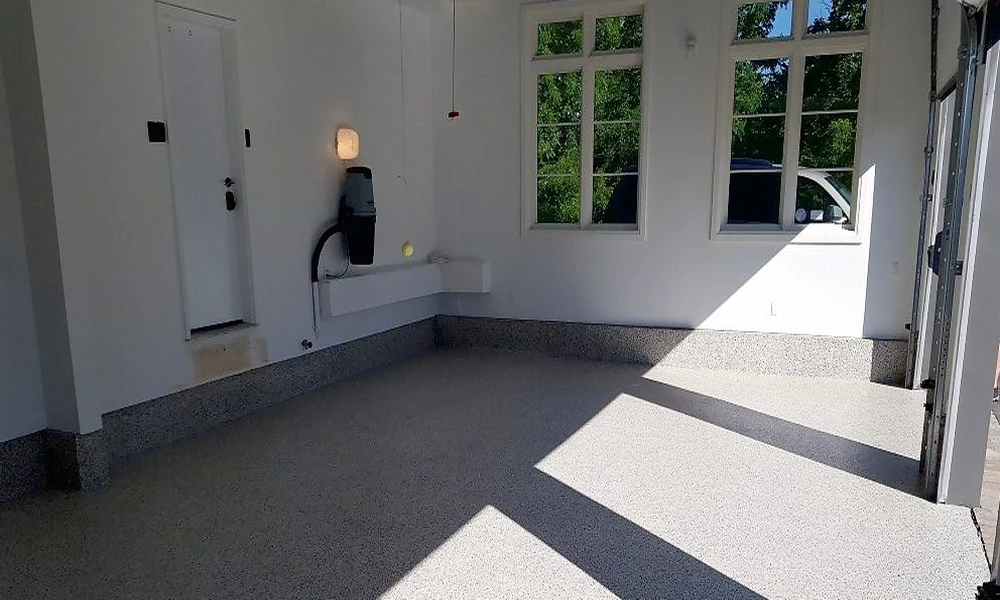

A garage floor takes more abuse than most people realize. Cars bring in water, dirt, road salt, and chemicals. Tools get dropped, oil can leak, and heavy equipment can leave marks on ordinary concrete. Over time, even a relatively new garage floor can start looking stained, dusty, or worn.
That is one reason garage floor coating has become such a popular home improvement project. A properly installed coating can make the garage easier to clean while giving the entire space a more finished appearance. But the quality of the result depends heavily on the preparation, materials, and installation process.
Start With the Concrete
Before choosing a color or coating system, look closely at the existing concrete.
Small cracks, pits, surface damage, and stains are common in garage floors. These problems do not automatically mean the concrete needs to be replaced. In many cases, damaged areas can be repaired before the coating is applied.
The condition of the slab also affects how much preparation is needed. A floor that looks fairly clean may still have a smooth surface that needs to be mechanically prepared so the coating can bond properly.
This is one area where rushing the job can cause problems later. Garage floor coating is only as good as the surface underneath it.
Preparation Matters More Than Most People Think
One of the biggest differences between a professional coating job and a basic DIY project is preparation.
A proper installation typically starts with mechanically preparing the concrete. Diamond grinding is one common method because it removes surface contaminants and opens the pores of the concrete. Cracks and pits can then be repaired before the coating system is installed.
For example, a typical professional system may include concrete grinding, crack and pit repairs, a primer or base coat, decorative flakes, and a protective topcoat. The exact materials vary depending on the installer and system being used.
The important thing is that each layer has a purpose. Skipping preparation to save time can eventually lead to peeling, bubbling, or other adhesion problems.
Epoxy Is Not the Only Option
When people hear “garage floor coating,” they often immediately think of epoxy. Epoxy has been used for years and can produce an attractive garage floor, but there are other coating systems available.
Polyaspartic coatings are increasingly used for residential garage floors because they offer fast installation and good resistance to UV exposure, chemicals, and everyday wear. Some systems can be installed and ready for foot traffic within a day, although the time before driving a vehicle onto the surface depends on the specific product and installation conditions.
The choice between epoxy, polyaspartic, and other systems should be based on the garage, the concrete condition, climate, intended use, and the manufacturer’s specifications.
For homeowners comparing professional systems, Orga Spaces Coatings provides an example of a polyaspartic flakes system that uses a prepared concrete surface, base coat, decorative flakes, and a polyaspartic sealer.
Think About How You Actually Use the Garage
A garage used mainly for parking has different needs from one that doubles as a workshop, gym, or hobby space.
If you regularly work on vehicles, for example, resistance to oil, chemicals, and stains may be particularly important. If the garage is connected to the house and gets frequent foot traffic, easy cleaning and slip resistance may matter more.
Appearance is also worth considering. Flake systems are popular because they can hide small imperfections and give the floor a more finished look. There are usually several color combinations available, so it helps to look at actual samples rather than choosing a color from a small screen image.
It is also worth thinking about what you plan to add later. If you are installing cabinets, slatwall, or overhead storage, planning the entire garage at the same time can make the finished space feel much more intentional.
What Does Garage Floor Coating Cost?
There is no single price that applies to every garage. The size of the floor is only one part of the equation.
The condition of the concrete, amount of surface preparation, repairs, coating system, number of layers, decorative options, and labor can all affect the final cost.
A two-car garage with clean, relatively new concrete may require considerably less preparation than an older floor with extensive cracking and surface damage.
Before comparing estimates, make sure you understand what is included. Ask whether concrete repairs, grinding, cleanup, decorative flakes, and the final protective coat are part of the quoted price.
If you want a starting point before contacting an installer, you can also use the free online estimate tool at orgaspaces.com to get an idea of potential project costs.
Don’t Ignore Maintenance
One advantage of a quality garage floor coating is that maintenance is generally straightforward.
Regular sweeping or dust removal helps prevent abrasive dirt from building up. When the floor needs a deeper cleaning, a mild cleaner and mop are usually enough for everyday dirt and spills. Oil and other chemicals should still be cleaned up rather than left sitting on the surface indefinitely.
Avoid assuming that a coated floor is indestructible. Heavy impacts, sharp objects, severe concrete movement, or improper cleaning products can still damage the surface.
Good maintenance simply helps the coating perform as intended for as long as possible.
Get More Than One Estimate
If you are considering garage floor coating, talk to a few installers before making a decision.
Ask what coating system they use, how they prepare the concrete, what repairs are included, how long the installation takes, and what warranty is provided. It is also useful to look at completed projects rather than relying only on marketing photos.
A good installer should be willing to explain the process in straightforward terms. If the conversation focuses entirely on the finished color and price without discussing concrete preparation, that is worth paying attention to.
A garage floor coating can be a relatively simple way to make an unfinished garage cleaner, more functional, and easier to maintain. The key is not just picking an attractive coating. Start with the concrete, understand the preparation process, compare the materials, and make sure the installation matches the way you actually use the space. When those pieces are handled properly, a coated garage floor can be a practical improvement that you enjoy every time you pull into the garage.
What to Know Before Installing a Garage Floor Coating
