
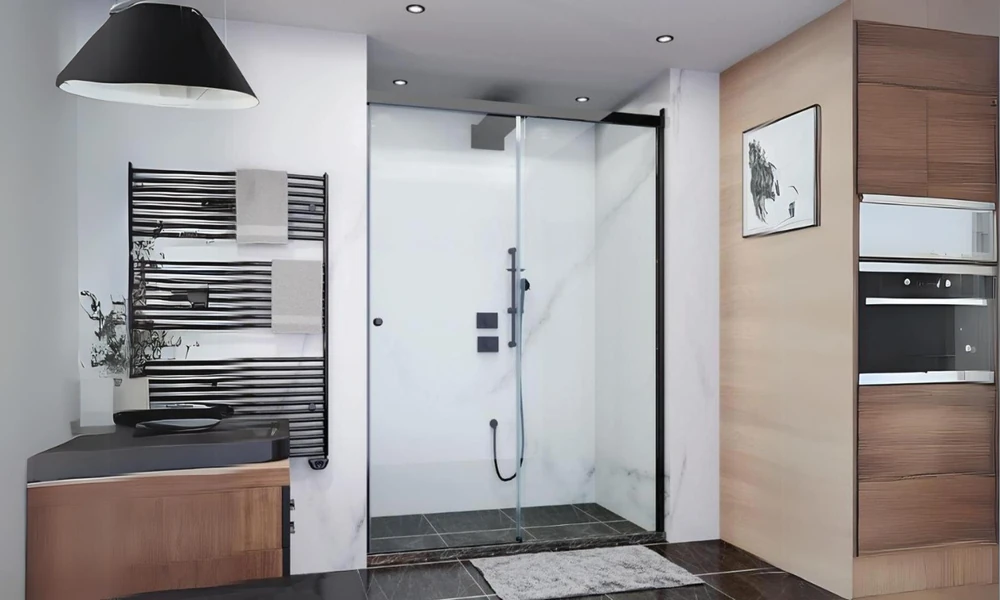

The right shower system depends on your water pressure, budget, and bathroom layout. Electric showers suit most plumbing setups and smaller spaces. Mixer and digital showers offer greater comfort and temperature control. Pair your choice with a thoughtful washroom door design and vanity design to pull the whole bathroom together.
A bathroom renovation involves more decisions than most people expect. The shower is usually where the biggest ones happen. Get it right, and you have a space that’s functional, comfortable, and genuinely enjoyable. Get it wrong, and you’re locked into a setup that frustrates you every morning.
This guide covers what you need to know, from system types and water pressure requirements to washroom door design and vanity choices.
What Are the Main Types of Shower Systems?
Showers fall into a few distinct categories, each suited to different homes and priorities.
- Electric showers draw directly from your cold water supply and heat on demand. They work with virtually any plumbing setup, cost less upfront, and are energy-efficient because they only heat the water you use. A solid choice for smaller bathrooms or households on a tighter budget.
- Mixer showers blend hot and cold water from your existing supply to reach a set temperature. They’re compatible with gravity-fed and mains pressure systems, and thermostatic models hold temperature steady even when water is used elsewhere in the house.
- Digital and smart showers function similarly to mixer showers but allow you to pre-set your preferred temperature via a wireless controller or smartphone app. They’re best suited to homes with a reliable hot water supply.
- Power showers use an internal pump to boost water flow, making them ideal for gravity-fed or low-pressure systems. They deliver a strong, invigorating spray without requiring a plumbing overhaul.
How Do You Choose the Right Shower for Your Bathroom?
Start with your water system. Low-pressure, gravity-fed systems (identifiable by a cold water tank in the loft) are compatible with all shower types, including power showers. High-pressure systems, such as combi boilers or unvented cylinders, work well with electric, mixer, and digital models but are not suitable for power showers.
- Budget: Electric showers are the most affordable to install. Digital systems carry a higher upfront cost but offer long-term convenience.
- Renovation scope: A concealed shower, where all plumbing runs behind the wall, delivers a clean, minimalist finish but requires more extensive work. An exposed system is quicker and cheaper to install, and suits retrofit projects.
- Functionality: Dual shower setups, which combine an overhead rain head with a handheld unit, offer flexibility that a single fixed head cannot.
What Should You Know About Washroom Door Design?
The shower enclosure is just as important as the system inside it. Washroom door design determines how the space looks, how easy it is to clean, and how well it fits the room’s dimensions.
Common options include:
- Hinged or pivot doors: Open outward, requiring clearance space. Best for larger bathrooms.
- Sliding doors: Track along the enclosure frame and suit tighter spaces where swing clearance is limited.
- Bi-fold doors: Fold inward and work well in compact enclosures.
- Walk-in screens: Open and frameless, these suit wet room layouts and create a seamless, contemporary look.
When planning washroom door design, match the frame finish, chrome, brushed nickel, or matte black, to the rest of your fixtures for a cohesive result.
How Does Vanity Design Affect Your Bathroom’s Look and Function?
The vanity anchors the bathroom’s overall aesthetic. Good vanity design balances storage, surface space, and visual proportion. A wall-mounted vanity keeps the floor visible, which makes smaller rooms feel more open. Freestanding units with drawers suit larger bathrooms where storage is a priority.
Finish and material choices matter. Matte surfaces hide water marks better than gloss. Natural timber or stone-effect finishes add warmth, particularly in bathrooms dominated by cool tile tones. Thoughtful vanity design also means choosing a basin and tap combination that works with your water pressure, low-pressure systems pair better with wider basin spouts than with narrow, high-flow taps.
Conclusion
A well-designed bathroom isn’t built on one decision. The shower system, enclosure, door style, and vanity all interact. When they’re chosen with the same brief in mind, space, pressure, budget, and style, the result feels considered rather than assembled piece by piece.
Start with your water system, work outward to the enclosure and vanity, and treat every decision as part of a single design conversation.
